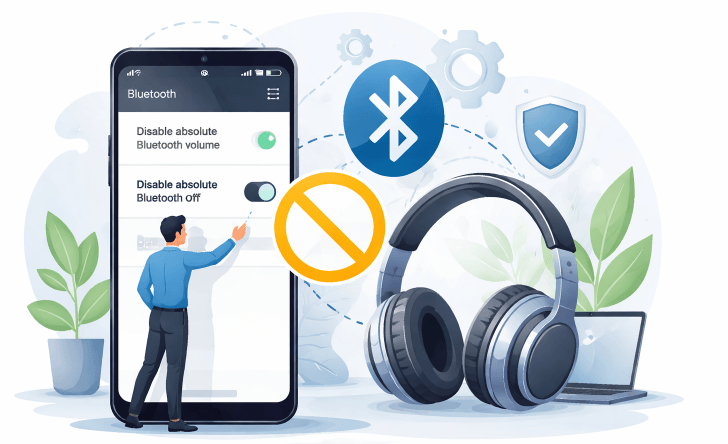
Android Disable Absolute Bluetooth Volume is something you may have come across if you’ve ever felt like your Bluetooth audio just doesn’t sound quite right. Maybe your earbuds are too quiet, or your car stereo suddenly blasts music at uncomfortable levels. If that sounds familiar, you’re not alone—and luckily, there’s a simple setting that might fix it.
In this article, we’ll break things down in a relaxed, easy-to-follow way. No complicated jargon, just real talk about how this feature works, why it exists, and when you should consider turning it off. We’ll also touch on variations like disable absolute volume Android, Bluetooth volume sync issue, and fix low Bluetooth volume Android so you get the full picture.
What Is Absolute Bluetooth Volume on Android?
Let’s start simple.
Absolute Bluetooth Volume is a feature on Android that syncs the volume level between your phone and your Bluetooth device. That means when you press volume up on your phone, it also increases the volume on your headphones or speaker—and vice versa.
Sounds convenient, right? Well… yes and no.
Here’s the catch:
- Some Bluetooth devices don’t handle this synchronization well
- Volume levels can become inconsistent or too limited
- You might experience low volume issues even at max level
This is where the option to disable absolute volume Android comes in handy.
Why You Might Want to Disable Absolute Bluetooth Volume
Not everyone needs to turn this feature off. But in certain situations, it can make a big difference.
Here are a few common reasons:
1. Low Volume Problem
If your Bluetooth headphones sound quieter than usual, even when maxed out, this feature could be the culprit. Disabling it allows your phone and device to control volume separately, often increasing overall loudness.
2. Better Audio Control
With absolute volume enabled, both devices act as one. When disabled, you get independent control—meaning you can fine-tune audio levels more precisely.
3. Compatibility Issues
Some older or budget Bluetooth devices don’t support this feature properly. This leads to bugs like:
- Sudden volume jumps
- No change in volume when adjusted
- Distorted sound
4. Enhanced Listening Experience
For audiophiles or even casual listeners who care about sound quality, disabling this feature can sometimes result in a cleaner and more balanced output.
How to Disable Absolute Bluetooth Volume on Android
Now let’s get to the practical part.
You won’t find this option in the usual settings menu. It’s hidden inside Developer Options—but don’t worry, it’s easy to access.
Step-by-Step Guide
- Open Settings on your Android phone
- Scroll down and tap About Phone
- Find Build Number and tap it 7 times until Developer Mode is activated
- Go back to Settings
- Open Developer Options
- Scroll until you find Disable Absolute Volume
- Turn it ON
That’s it. You’ve successfully applied the Android disable absolute Bluetooth volume setting.
Note: You may need to disconnect and reconnect your Bluetooth device for changes to take effect.
Before vs After: What Changes?
To give you a clearer idea, here’s a simple comparison:
| Feature | Absolute Volume ON | Absolute Volume OFF |
|---|---|---|
| Volume Control | Synced | Independent |
| Maximum Loudness | Limited (sometimes) | Potentially higher |
| Device Compatibility | May cause issues | More flexible |
| Audio Customization | Limited | More precise |
| Risk of Volume Jumps | Higher | Lower |
As you can see, turning it off gives you more control—especially if you’ve been dealing with annoying audio quirks.
When You Should NOT Disable It
Now, before you rush to change the setting, let’s be fair. This feature exists for a reason.
You might want to keep Absolute Volume enabled if:
- Your Bluetooth device works perfectly fine
- You prefer simple, unified volume control
- You don’t experience any audio issues
Disabling it unnecessarily could actually make things slightly less convenient, especially if you like everything synced.
Common Issues After Disabling (And Fixes)
Sometimes, turning off this feature can introduce new quirks. Nothing serious, but worth knowing.
Volume Too Loud Suddenly
Since your phone and device volumes are now separate, both might be high.
Fix: Lower volume on both your phone and Bluetooth device.
Volume Buttons Feel “Different”
You might notice that pressing volume buttons doesn’t behave the same way.
Fix: Give it a little time—it’s just a different control system.
Bluetooth Needs Reconnection
Changes might not apply immediately.
Fix: Turn Bluetooth off and on again, or reconnect your device.
Tips for Better Bluetooth Audio on Android
If you’re already exploring settings like disable absolute Bluetooth volume Android, here are a few extra tips to improve your listening experience:
Use High-Quality Audio Codecs
Some Android phones allow you to switch codecs (like AAC, aptX, or LDAC) in Developer Options. These can significantly impact sound quality.
Keep Devices Updated
Firmware updates for your earbuds or speakers can fix compatibility issues.
Avoid Interference
Bluetooth can be affected by other wireless devices. Try to keep your phone close to your audio device.
Adjust Equalizer Settings
Most Android devices have built-in EQ settings. Play around with them to match your taste.
Pro Tip: Small tweaks can make a big difference in how your music sounds.
Is It Safe to Use Developer Options?
Short answer: Yes.
Long answer: As long as you don’t randomly change settings you don’t understand.
The Android disable absolute Bluetooth volume option is safe and commonly used. Just avoid experimenting with unrelated features unless you know what they do.
Final Thoughts
At the end of the day, Android Disable Absolute Bluetooth Volume is one of those hidden gems that can quietly solve frustrating audio issues. It’s not something everyone needs, but when you do, it can feel like a total game-changer.
If you’ve been struggling with low Bluetooth volume, inconsistent sound, or strange audio behavior, it’s definitely worth trying. And if nothing else, it gives you more control—which is always a good thing.
So go ahead, explore your settings, test it out, and see what works best for you. After all, your listening experience should feel just right—not almost right.