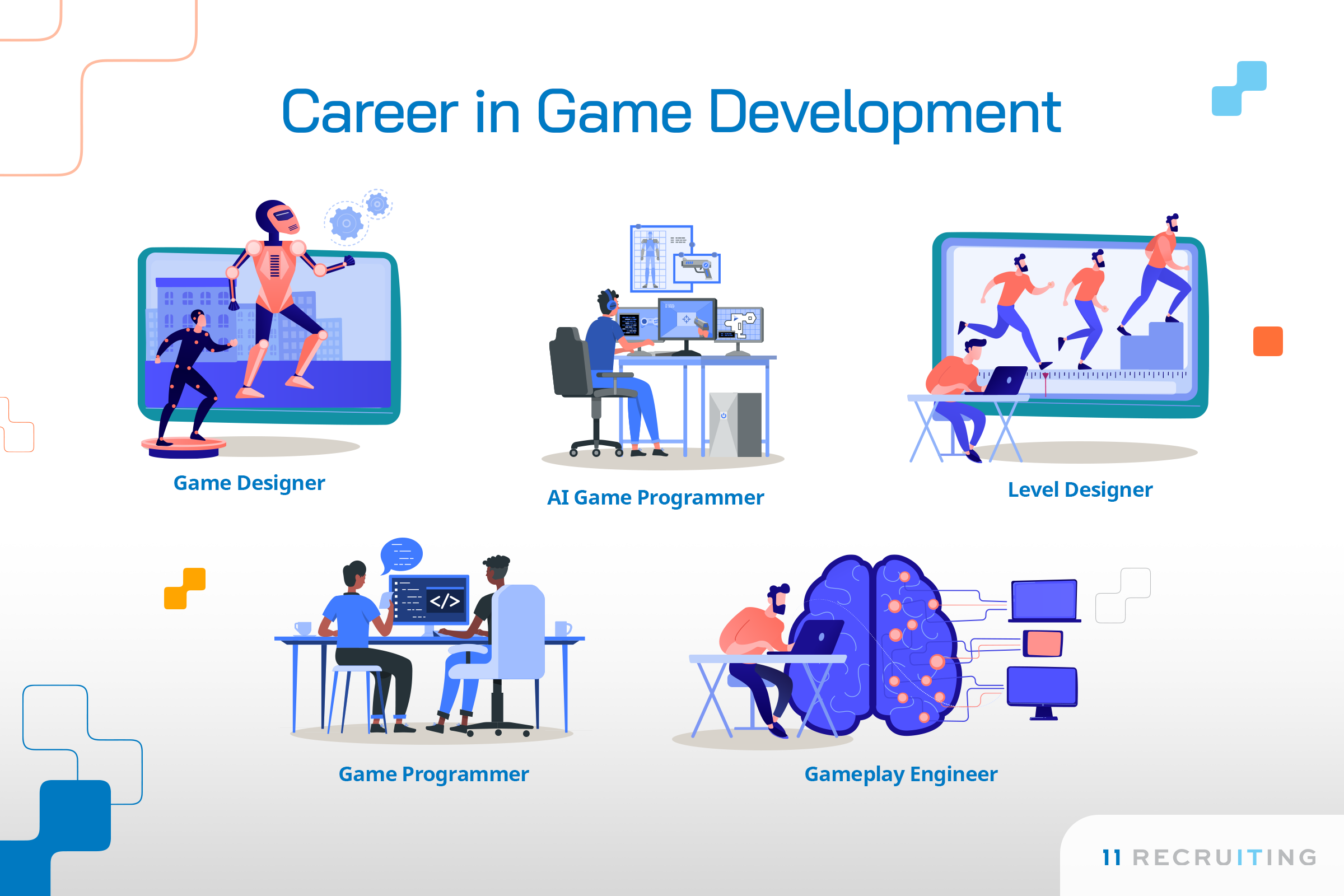
How to Start a Career in Game Development is a question that pops up in the minds of many people who love games but aren’t sure how to turn that passion into something more serious. Maybe you’ve spent hours exploring virtual worlds, admiring the design, storytelling, or mechanics—and now you’re wondering how to be part of that creative process. The good news? The game industry is more accessible than ever, and there’s no single “correct” path to get started.
Understanding the Game Development Industry
Before diving in, it helps to understand what game development actually involves. It’s not just coding or designing characters—it’s a combination of multiple disciplines working together.
Game development typically includes:
- Programming (game mechanics, systems, AI)
- Game design (rules, gameplay flow, user experience)
- Art and animation (characters, environments, UI)
- Sound design (music, effects, voiceovers)
- Testing and quality assurance
Each role requires different skills, so the first step in learning how to start a career in game development is figuring out where you fit best.
Choose Your Path Early (But Stay Flexible)
You don’t need to master everything. In fact, trying to do so can slow you down. Instead, pick one area to focus on first.
Here’s a simple breakdown:
| Role | Key Skills Needed | Tools Commonly Used |
|---|---|---|
| Programmer | Logic, coding, problem-solving | Unity, Unreal, C#, C++ |
| Game Designer | Creativity, storytelling | Game engines, prototyping |
| Artist | Drawing, 3D modeling | Blender, Photoshop |
| Sound Designer | Audio editing, composition | FL Studio, Audacity |
That said, being a “hybrid” developer (especially early on) can be a big advantage. Indie developers often wear multiple hats.
Learn the Essential Skills
Once you’ve chosen your path, it’s time to build your foundation. This is where many beginners get stuck—they overthink learning instead of actually starting.
Here’s a simple approach:
- Start with free tutorials (YouTube, blogs, forums)
- Practice by building small projects
- Learn by doing, not just watching
If you’re aiming to become a programmer, focus on languages like C# or C++. If you’re more into design, learn how game mechanics work and experiment with level design.
Don’t wait until you feel “ready”—you become ready by starting.
Pick the Right Game Engine
Game engines are tools that help you build games without starting from scratch. Choosing one early can save you a lot of time.
Popular options include:
- Unity (great for beginners and indie developers)
- Unreal Engine (powerful, high-end graphics)
- Godot (lightweight and beginner-friendly)
Each engine has its own strengths, but Unity is often recommended for those exploring how to start a career in game development because of its massive community and learning resources.
Build Your First Game (Even If It’s Simple)
This is where things get real. Your first game doesn’t need to be impressive—it just needs to exist.
Start small:
- A basic 2D platformer
- A simple puzzle game
- A clicker game
The goal isn’t perfection. The goal is completion.
Finishing a small project teaches you more than starting ten big ones.
Create a Portfolio That Stands Out
If you’re serious about turning this into a career, you need a portfolio. This is your proof of skill—more important than certificates or degrees in many cases.
Your portfolio should include:
- Completed game projects
- Screenshots or gameplay videos
- A short explanation of your role in each project
If possible, upload your games to platforms like itch.io or GitHub.
Join the Game Development Community
One underrated step in learning how to start a career in game development is connecting with others.
Communities can help you:
- Get feedback on your work
- Learn faster through shared knowledge
- Discover job opportunities
You can join:
- Discord servers
- Reddit communities
- Game jams (like Ludum Dare or Global Game Jam)
Game jams are especially valuable—they push you to create something within a limited time, which builds both skill and confidence.
Consider Formal Education (Optional)
You don’t need a degree to succeed in game development—but it can help depending on your goals.
Formal education can offer:
- Structured learning
- Networking opportunities
- Access to mentors
However, many successful developers are self-taught. What matters most is your ability to create and solve problems.
In this industry, your work speaks louder than your resume.
Apply for Internships or Entry-Level Roles
Once you’ve built some skills and projects, it’s time to step into the professional world.
Look for:
- Internships at game studios
- Junior developer roles
- Freelance opportunities
Don’t be discouraged by rejection—it’s part of the process. Keep improving your portfolio and applying consistently.
Stay Updated and Keep Learning
Game development is always evolving. New tools, trends, and technologies appear regularly.
To stay relevant:
- Follow industry news
- Learn new tools when needed
- Experiment with different styles of games
The more adaptable you are, the stronger your long-term career will be.
Common Mistakes to Avoid
Many beginners make the same mistakes when figuring out how to start a career in game development. Avoiding them can save you months (or even years).
Some of the biggest ones include:
- Trying to build a “dream game” too early
- Focusing only on theory without practice
- Comparing yourself too much to others
- Giving up after the first failure
Progress in game development is slow—but incredibly rewarding.
Turning Passion Into a Sustainable Career
At some point, you’ll move from learning to earning. This transition can feel challenging, but it’s completely achievable.
Ways to make money in game development:
- Working at a studio
- Freelancing
- Publishing your own indie games
- Creating assets or tools for other developers
Each path has its own pros and cons, so choose what fits your lifestyle and goals.
Final Thoughts
How to Start a Career in Game Development isn’t about having perfect skills or expensive tools—it’s about consistency, curiosity, and creativity. Everyone starts somewhere, and the most important step is simply beginning.
You don’t need to know everything today. Start small, keep learning, and build something—even if it’s imperfect.
Because at the end of the day, the people who succeed in game development aren’t the ones who wait—they’re the ones who create.