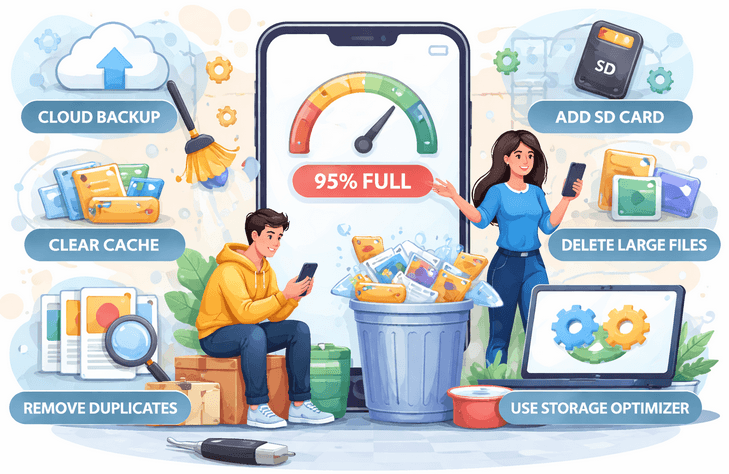
How to fix full storage on your phone without deleting important apps is a question almost everyone has asked at least once. You open your phone to take a photo, install an update, or download a file, and suddenly you’re hit with that dreaded “storage full” notification. It’s frustrating, especially when you don’t want to remove the apps you use every day. The good news is that you don’t actually need to sacrifice your favorite tools just to free up space.
In this guide, we’ll walk through practical, easy, and human-friendly ways to reclaim storage. These tips are designed for everyday users, not tech experts, and they’ll help you keep your phone running smoothly without deleting essential apps. Along the way, we’ll also explore variations like fix phone storage full, free up space without uninstalling apps, and solve storage full problem on mobile so you get a complete picture.
Understand What’s Really Taking Up Space
Before you start clearing things randomly, it’s important to know what’s eating your storage. Often, it’s not the apps themselves but the hidden data they accumulate over time.
Photos, videos, cached files, and downloaded documents usually take up more space than the apps you rely on. Messaging apps, for example, store media files automatically. Over time, this builds up silently in the background.
Take a moment to check your storage breakdown in your phone settings. You’ll usually see categories like:
- Apps
- Photos & Videos
- Documents
- System
- Cached Data
This step alone can reveal surprising results. Sometimes, one category dominates the storage without you realizing it.
Clear Cache Without Removing Apps
One of the easiest solutions to free up space without deleting apps is clearing cache. Cache files help apps load faster, but they’re temporary and safe to remove.
When you clear cache, you’re not deleting your account, settings, or login data. You’re simply removing temporary files.
Benefits of clearing cache:
- Instant storage recovery
- No risk to your important apps
- Improves phone performance
- Reduces lag
Some apps like browsers, social media, and streaming platforms store large cache files. Clearing them periodically can free hundreds of megabytes, sometimes even gigabytes.
You can think of cache as digital dust — harmless but messy when left untouched.
Move Photos and Videos to Cloud Storage
Photos and videos are usually the biggest storage consumers. Instead of deleting them, you can move them to cloud storage services.
Once uploaded, you can remove local copies while still accessing them anytime. This is one of the most effective ways to fix full storage on your phone without uninstalling apps.
Here’s a simple comparison:
| Storage Type | Space Saved | Access | Risk |
|---|---|---|---|
| Local Storage | None | Instant | Can fill quickly |
| Cloud Storage | High | Requires internet | Safe backup |
| External Drive | High | Manual access | Physical device needed |
Cloud storage also gives you peace of mind because your memories remain safe even if your phone is lost or damaged.
Delete Duplicate Files
Duplicate files are sneaky. You might have multiple copies of the same photo, video, or document without realizing it. These duplicates often come from downloads, sharing apps, or editing copies.
Cleaning duplicates can free up significant space without removing anything important. It’s like organizing your room — you keep everything valuable but remove unnecessary repetition.
Look for:
- Duplicate screenshots
- Edited photo copies
- Re-downloaded documents
- Shared images from messaging apps
This method is simple but surprisingly powerful.
Manage Downloads Folder
Your downloads folder often becomes a forgotten storage trap. PDFs, images, videos, and random files accumulate over time.
Instead of deleting everything, review the folder and keep only what you still need. Many files are temporary, such as:
- Event tickets already used
- Documents already saved elsewhere
- Installation files
- Old attachments
Cleaning this folder is a smart way to solve storage full problem on mobile without touching your apps.
Use Lite Versions of Heavy Apps
Another clever trick is switching to lighter versions of apps. These versions consume less storage while keeping essential features.
For example, some apps offer “Lite” editions designed for lower storage usage. By replacing a heavy app with its lighter version, you free space without losing functionality.
This approach is especially helpful for:
- Social media apps
- Messaging platforms
- News apps
- Shopping apps
Think of it as storage minimalism — keeping what matters while reducing excess.
Remove Offline Content
Many apps allow offline downloads. Music, videos, maps, and podcasts can quietly fill your phone storage.
Check apps that allow downloads and remove content you no longer need. You can always re-download later.
Common offenders include:
- Music streaming apps
- Video streaming apps
- Navigation apps
- Podcast players
Removing offline content can instantly free space without affecting the app itself.
Compress Large Files
If you don’t want to delete files, compressing them is a great alternative. Compression reduces file size while keeping content intact.
This works well for:
- Videos
- Photos
- Documents
- Archives
You still keep your files, but they occupy less storage. It’s a win-win solution.
Transfer Files to External Storage
Using an external storage device is another reliable method. You can move photos, videos, and documents to a USB drive or memory card.
This helps maintain access while freeing internal storage. It’s especially useful if you prefer offline storage instead of cloud solutions.
External storage gives you:
- More space instantly
- Full control over files
- No internet dependency
- Long-term backup
Clean Messaging App Media
Messaging apps store every image, video, and audio file shared in chats. Over time, this becomes a huge storage burden.
Instead of deleting conversations, remove only media files. Most apps allow you to manage storage within settings.
You’ll often find categories like:
- Large files
- Frequently forwarded media
- Old videos
- Unused media
Cleaning these selectively helps reclaim space without losing conversations.
Turn On Smart Storage Features
Many phones offer automatic storage management features. These tools identify unused files and recommend safe cleanup options.
They may suggest removing:
- Temporary files
- Old downloads
- Duplicate media
- Cached data
Using these features saves time and avoids accidental deletion of important apps.
Organize Files Regularly
Storage problems usually build up slowly. Regular maintenance prevents future issues.
You don’t need to do a deep clean every week. A quick monthly check is enough to keep things under control.
Here’s a simple routine:
| Task | Frequency | Benefit |
|---|---|---|
| Clear cache | Weekly | Quick space gain |
| Review downloads | Monthly | Remove clutter |
| Backup photos | Monthly | Reduce storage |
| Delete duplicates | Every 2 months | Optimize space |
Consistency is key. Small steps prevent big storage problems.
When Storage Still Feels Full
If you’ve tried everything and still see limited space, check system storage. Sometimes updates and hidden files take space.
Restarting your phone can also refresh temporary storage. It sounds simple, but it can make a difference.
Also, remember that modern apps grow over time. Periodic optimization keeps your phone healthy and responsive.
Final Thoughts
Running out of storage doesn’t mean you must delete important apps. With the right approach, you can reclaim space safely and efficiently. From clearing cache and moving media to cloud storage, to removing duplicates and managing downloads, there are many ways to handle the issue.
The key idea behind how to fix full storage on your phone without deleting important apps is smart management rather than sacrifice. Your apps stay, your data remains safe, and your phone performs better.
Think of your phone like a digital backpack. When it gets heavy, you don’t throw away essentials — you reorganize, compress, and store things smarter. By applying these tips, you’ll keep your storage under control and avoid that annoying notification in the future.